The French-based firm shares its science of desire
Arco Publicidad is positioning itself at the center of a new strategic era in Puerto Rico’s advertising market with the formal presentation of La Central Publicitaria Part of Havas, a division that will serve as the island’s operational bridge into one of the world’s largest communications groups.
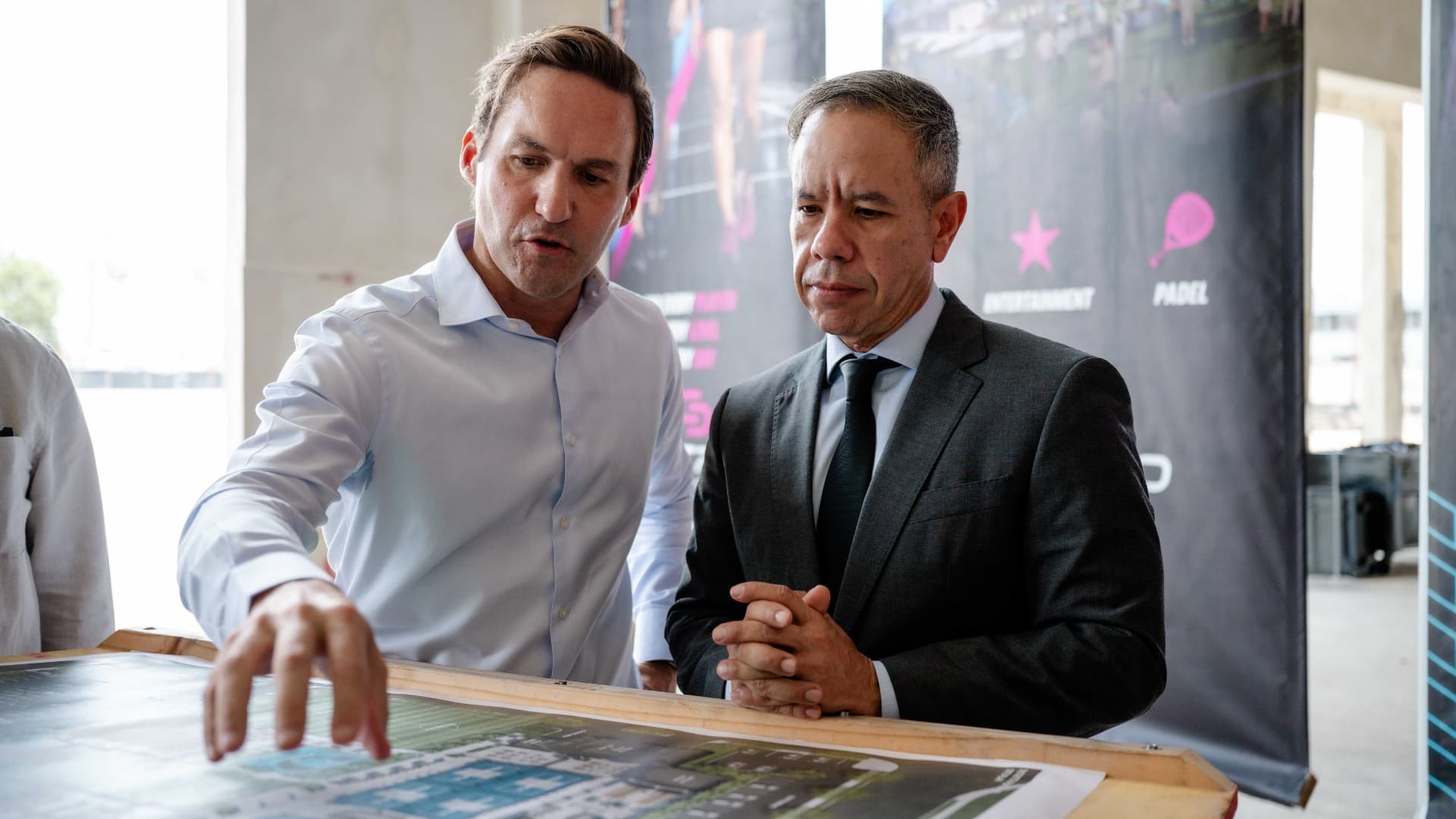
The announcement, made during a press conference in San Juan on Thursday, marks the first time Puerto Rican brands will have direct access to Havas’ global methodologies, research systems, and AI‑powered tools, resources typically reserved for multinational markets.
Efrén Pagán, president of Arco Publicidad, explained that the partnership is the result of a multi‑year relationship with Havas, which selected Arco as its representative in Puerto Rico because the agency mirrors the network’s “Village” philosophy: all disciplines under one roof, unified processes, and a single strategic language. “This is an additional service that we are providing to the market,” Pagán said, noting that both Arco’s clients and Havas’ global accounts in Puerto Rico will now operate through La Central Publicitaria.
During the presentation, Diego García, executive director for Havas Central America and the Caribbean, emphasized the scale of the French‑based holding: more than 150 offices worldwide, thousands of employees, and ownership under Vivendi—parent company of Universal Music and other major entertainment properties. “Havas is part of the largest advertising holdings in the world,” García said, underscoring that the network’s model is built on integration rather than siloed creative, media, and production shops.
Havas’ “Village” structure, already implemented in more than 70 offices globally, consolidates creative, media, customer experience, production, and health communications under a single P&L. This allows clients to access multiple disciplines through one point of contact and one unified cost structure, an approach the company says is increasingly necessary as marketing challenges become more fragmented and technologically complex.
The problem: Indifference
The centerpiece of the event was the presentation by Diego Plazas, chief strategy officer for Havas, who introduced the network’s new global methodology: The Science of Desire. The framework is the result of a massive research initiative unveiled weeks ago at the Cannes Lions festival, involving 87,500 consumer responses, 2,400 brands, and more than 1,000 AI‑assisted interviews.
Plazas described a stark diagnosis: indifference is now the biggest threat to brands worldwide. “The worst thing that can happen is that a brand is in the meh, in total indifference,” he said. According to Havas’ study, 84% of brands measured globally suffer from consumer indifference, a figure that has increased three percentage points in recent years.
Unlike negative sentiment, which can be addressed because it provides a starting point, indifference leaves brands without direction. Traditional metrics such as awareness, consideration, and favorability fail to predict growth when a brand is stuck in the “gray zone” of irrelevance.
The answer: Desire
Havas’ research identifies desire as the variable most strongly correlated with brand growth. Plazas explained that desire is not a vague emotional concept but a measurable behavioral system composed of three interconnected drivers: attraction, the perceived superiority or magnetism of the product or service; affinity, which is the alignment between the brand’s values and the consumer’s own identity and needs; and attachment, the degree to which a consumer feels they cannot live without the brand.
These three variables move together; touching one affects the others. “Opinion, actual experience, is what allows me to determine whether my brand has high desire or not,” he said.
The company validated the model statistically, finding a correlation coefficient (R² = 0.27) between increases in desirability and increases in sales—a level strong enough for Havas to declare desire a scientifically actionable growth driver. Brands that increased both sales and desirability saw 36% more business growth, while brands experiencing sales declines but rising desirability saw 58% less erosion in equity compared to peers.
Plazas emphasized that desire is built from two major components: the brand’s purpose and the consumer’s real‑world experience. This means Havas will measure not only what people say about a brand, but how they interact with it—from first exposure to post‑purchase service. “Opinion, actual experience, is what allows me to determine whether my brand has high desire or not,” he said.
To support this, Havas brings a suite of 63 proprietary and partner tools—AI‑powered audience avatars, brand‑insight engines that analyze how consumers prompt large language models, econometric forecasting systems, and rapid‑iteration creative platforms. All these tools will now be available through La Central Publicitaria.
A regional endorsement
García noted that Havas chose Puerto Rico to host its regional meeting for Central America and the Caribbean, underscoring the island’s importance in the network’s expansion. He added that the partnership with Arco was not automatic: “There were several options that were quickly ruled out… until we found Efren and his people.”
Plazas closed by linking the methodology’s origins to one of Havas’ most high‑profile global solutions: the Louis Vuitton–Dior creative takeover of the Paris 2024 Olympics opening ceremony, an activation that demonstrated how cultural impact can generate desire without traditional advertising. “The genesis of desire was our own solution for the Paris Olympics,” he said.
For Puerto Rico’s advertising market—long fragmented between creative shops, media agencies, and production houses—the arrival of Havas’ integrated model represents a shift toward globalized, data‑driven brand building. Arco’s La Central Publicitaria will now serve as the local hub for this methodology, offering brands a way to escape the trap of indifference and compete through measurable desire.