The next 30 days may be crucial
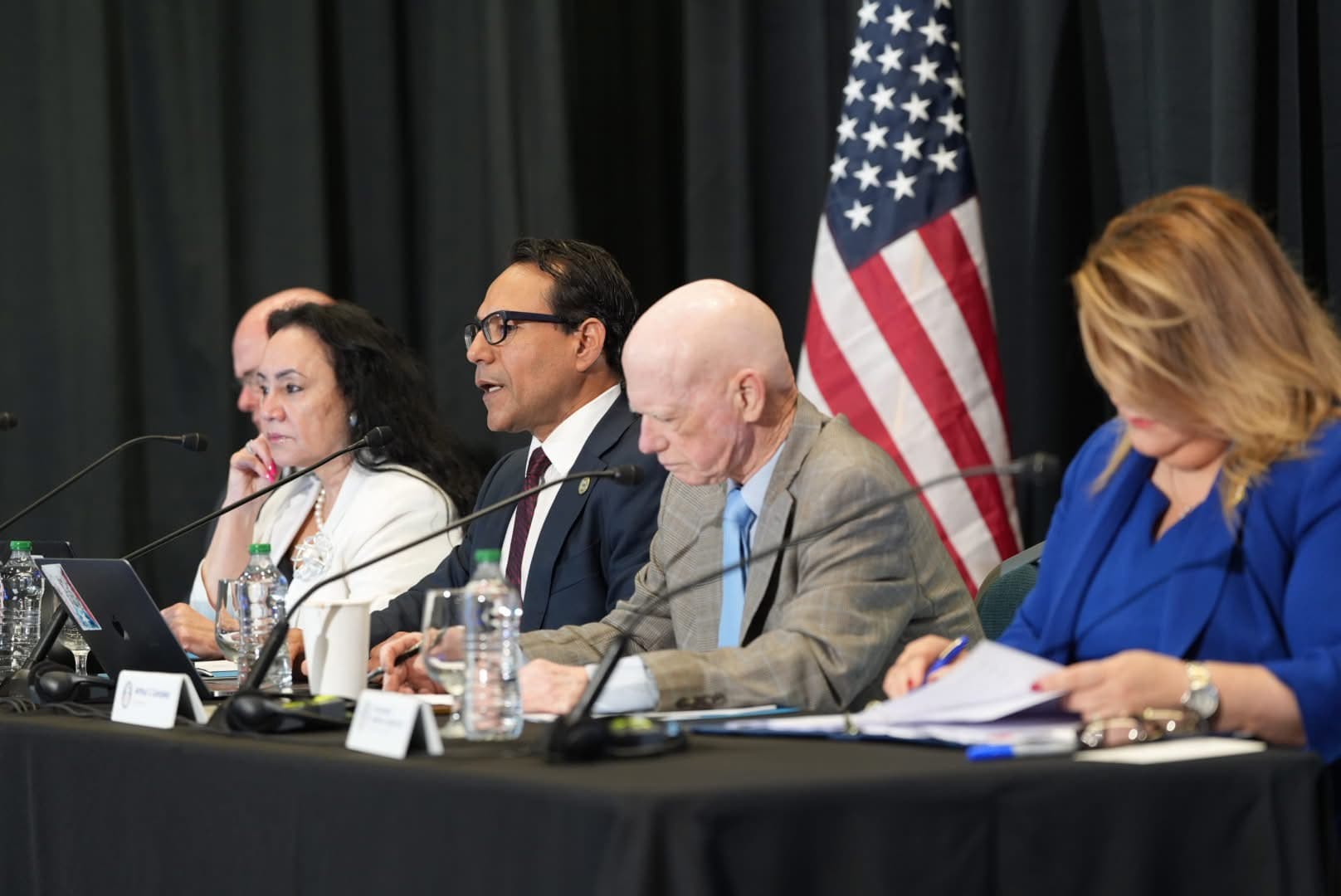
The U.S. First Circuit Court of Appeals has restarted the long-running dispute over President Trump’s removal of three members of Puerto Rico’s Financial Oversight and Management Board, ordering the parties to explain how the case should proceed in light of a recent Supreme Court decision on presidential removal authority.
In a July 1 order, the appeals court directed the U.S. Department of Justice and Board members Arthur J. González, Betty Rosa, and Andrew Biggs to file motions governing further proceedings within 30 days. The directive signals that the appellate panel will reassess the case after the Supreme Court’s decision in Trump v. Cook, which addressed when courts may review a president’s decision to remove officials protected by “for cause” language.
“We are in receipt of appellants’ Status Report in which they informed us of the issuance by the Supreme Court of its opinion in Trump v. Cook, ___ S.Ct. ___, 2026 WL 1855613 (U.S. June 29, 2026). As suggested in appellants’ December 22, 2025, Unopposed Motion to Hold Case in Abeyance, the parties shall ‘file motions to govern further proceedings [in this case] no later than 30 days’ from the date of this order,” the appeals court wrote.
The order comes at a pivotal moment. In Trump v. Cook, the U.S. Supreme Court refused to let President Donald Trump fire Federal Reserve Governor Lisa Cook as it stood firm to preserve the central bank’s cherished independence against an unprecedented challenge by the Republican president.
The court, in a 5-4 ruling, blocked Trump from removing Cook for now, providing a safeguard for the Fed specifically, even as it boosted the president’s power over government entities in another ruling.
PROMESA’s removal clause follows that broader structure. It provides only that “the President may remove any member of the Oversight Board only for cause,” without defining “cause,” listing specific grounds, or requiring notice or a hearing. Under Trump v. Cook, that silence could be central to the outcome.
González, Rosa, and Biggs challenged their 2025 removal from the Oversight Board, arguing that the president acted unlawfully and denied them due process. The Justice Department, however, has argued that President Trump removed them for “inefficiency, ineffectiveness, neglect, and failure,” citing what it described as their inability to resolve Puerto Rico’s fiscal crisis and alleged mismanagement of public funds.
“Bodies under Plaintiffs’ supervision have lavished funds on law firms, advertisers, and consultants… roughly $2 billion in professional ‘advising’ fees… over $250 million in consultant and law-firm fees into PREPA’s bankruptcy proceedings,” the DOJ wrote.
The government also argued that the president’s judgment is not reviewable, that public office is not a protected property interest, and that PROMESA does not provide procedural protections such as notice or a hearing.
A federal judge nevertheless ruled that the removal of the three Board members was illegal, leaving the dispute for the First Circuit to resolve. The case was put on hold by the First Circuit pending the Supreme Court ruling.
The First Circuit’s July 1 order does not decide the merits of the dispute. Instead, it asks both sides to explain what remains of the case after Trump v. Cook. The DOJ and the former Board members must address whether any claims remain viable, whether the district court proceedings should be vacated or dismissed, and whether the appellate court should order supplemental briefing or send the case back to the lower court.
The parties’ filings over the next 30 days will determine the next phase of the case.