Ricardo Dalmau: ‘We Inherited a League in the Negative and Made It Profitable’
During his seven-year presidency, the BSN grew from nine teams to 12, turned a pandemic-era scramble into a self-sustaining business, and landed its first U.S. broadcast deal with NBC Sports
During the 2010s, the BSN was in constant turmoil. Every offseason brought rumors of teams folding, fans weren’t showing up, and the league had a thin digital footprint.
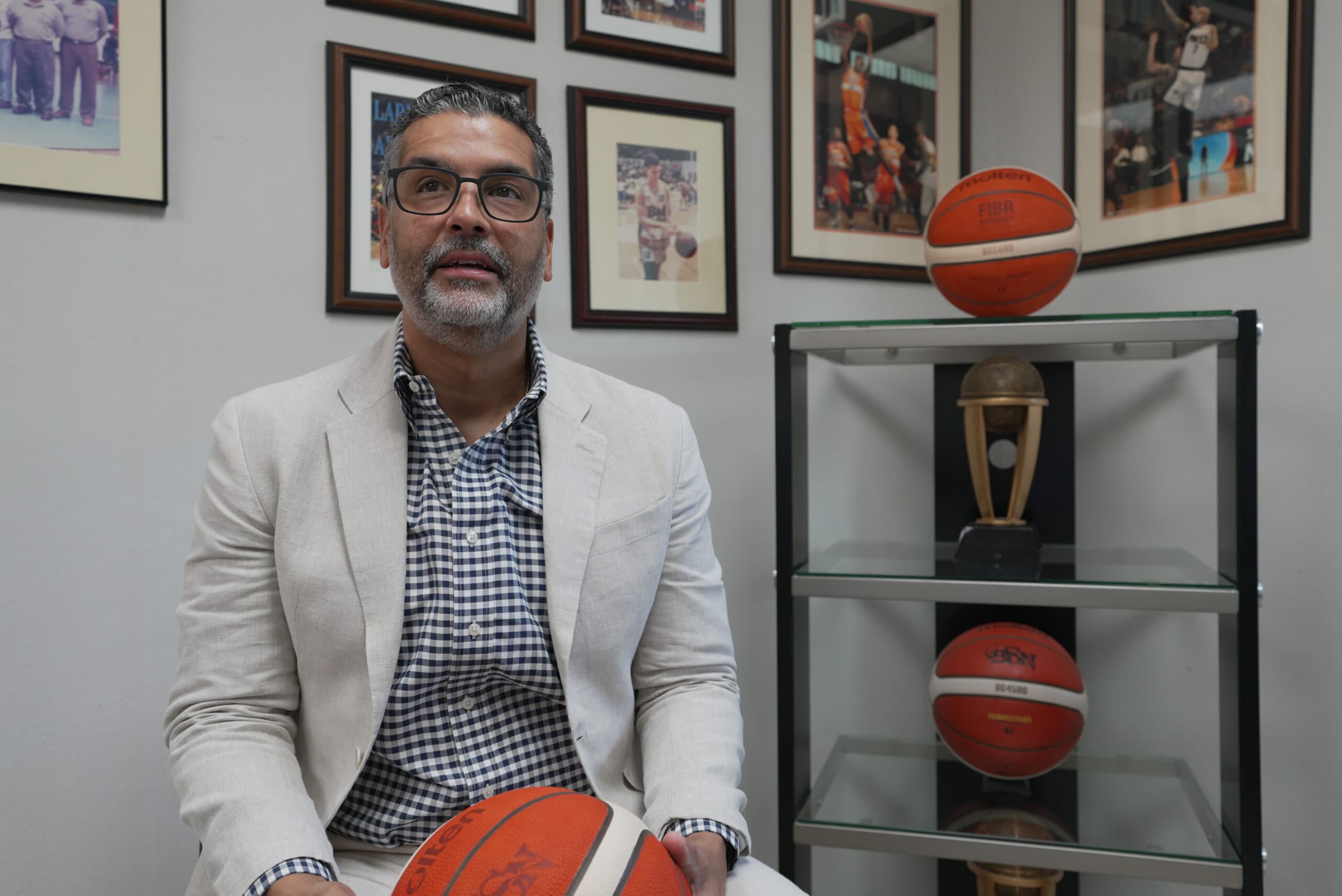
Ricardo Dalmau, a CPA and former star player who comes from a lineage of great athletes—his father Raymond Dalmau is one of the highest scorers in BSN history and a four-time champion—took over the league’s presidency in September 2019. He faced a tall test just from the state of the league alone. Then came a pandemic that threatened to stop sports completely.
This week, he sat down with Caribbean Business for a rare exclusive interview to share how exactly he turned the ship around. The story will seem familiar to anyone involved in successful corporate turnarounds.
Barely six months after Dalmau’s rise to the helm, when COVID-19 began in earnest and basketball was the last thing on people’s minds, he faced a stern dilemma. Either skip a season for the first time in 89 years, or find a way to make what seemed impossible, possible.
“We designed a financial structure to raise $4 million,” he recalls. “The teams had to raise $1 million and the league $3 million in three months, and we did it. We were able to raise $1.5 million in tax credits, because we knew Act 60 expanded the definition of film production to include entertainment programs. That’s when we presented a plan to the government showing that the league could produce a tournament that was an entertainment program.”
BSN was off and running. The 2020 season was held, and it became a financial lifeline for a league that had none to spare.
From survival plan to business plan
What Dalmau describes is a textbook liquidity rescue. A hard revenue target, a cost split between the center and its franchises, and a legal reading of an existing incentives statute that turned a shutdown into a financing vehicle.
It is the kind of maneuver a business-recovery consultant bills for, not one sports federations typically pull off on their own, and it set the pattern for the rest of his tenure, with an approach that treats the league less like a cultural institution to be preserved and more like a company to be run.
That discipline shows up in the numbers the BSN now manages as routine business. The salary structure operates under a soft cap of $1 million and a hard cap of $1.5 million per team for the 2026 season, up $100,000 from the year before, a modest controlled increase rather than the kind of spending war that has sunk other regional leagues.
BSN has also expanded its footprint. It fielded nine teams four years ago and boasts 12 today, including the return of the Santeros de Aguada in 2024 and the Osos de Manatí, relocated from Guayama in 2022. Growth, that is, happened deliberately.
Turning celebrity into capital
After 2020, the league’s popularity started to soar, and it had as much to do with the product on the court as with the fact that some of the world’s biggest artists began buying teams.
In 2021, Bad Bunny and his manager Noah Assad revived the Cangrejeros de Santurce, dormant since 2016, the same year Anuel AA and his then-manager purchased the Capitanes de Arecibo. Ozuna followed a year later, relocating the Brujos de Guayama franchise to Manatí and rebranding it Los Osos.
“At the time, we made a lot of noise because of the artists who were coming into the league,” Dalmau continued. “We knew it was a special moment, but we also knew that it was a once in a lifetime opportunity, because even though Ozuna still owns Manatí and Bad Bunny and Noah Assad still own Santurce, we knew after the first year it would become old news.”
The business read on that moment is that Dalmau treated celebrity ownership as a marketing subsidy with a short shelf life, not a growth strategy on its own. The artists brought a wave of earned media, celebrity courtside visits from figures like LeBron James and Floyd Mayweather, and a new, younger audience discovering the league for the first time.
But converting that one-time attention into a durable business meant building the infrastructure, media rights, merchandising and player marketing underneath it, before the novelty wore off.
“Fans are fans, and they’ll watch the league. So how do we find a way to reach the casual fans and show them what the identity of our players is and who they really are? We worked extremely hard to do that.”
Ricardo Dalmau
Building the brand around the players
Making stars of your players might not be as easy as it sounds, but the BSN has made a good number of players into recognizable figures for hardcore and casual fans alike.
Dalmau ought to know. He played alongside his brother Richie, reaching BSN finals in 1999 and 2000, and winning a title in 2007 playing for his father, who coached the team.
“Fans are fans, and they’ll watch the league. So how do we find a way to reach the casual fans and show them what the identity of our players is and who they really are? We worked extremely hard to do that. Sometimes it was effective, other times not so much,” Dalmau added.
In this era of social media, people have a lot of options, so getting their attention is a competitive fight, not a given.
To meet the challenge, BSN has grown its brand online steadily for the past six years across Facebook, Instagram and YouTube. Its Instagram account alone now carries some 280,000 followers, modest by global sports standards but a meaningful base for a market of roughly three million people with no professional football, baseball or hockey league of its own to compete for attention.
Merchandise as a new revenue line
Add the merchandising side of the league. Ten years ago, fans couldn’t walk into a store and buy jerseys or trading cards. Today those options exist, and more.
“The merch has to do a lot with the teams. They’ve been able to produce quality items and have refreshed their brands. We’re working to create a platform for any fan on the island or outside to be able to buy the merch through the BSN,” Dalmau said.
That last point, centralizing e-commerce under the league rather than leaving it to each franchise, is a standard consolidation move in sports business. It captures a cut of every team’s merchandise sales, standardizes the buying experience, and crucially, makes it possible for a fan in Orlando or New York to buy a Cangrejeros jersey without ever setting foot in Puerto Rico.
Exporting the product
Speaking of outside the island, Dalmau wants the league to expand to a larger audience, with a big bet on reaching the Puerto Rican and broader Latino community across the United States.
This year, for the first time in BSN history, the league signed a broadcast agreement with NBC Sports, putting the conference finals and the championship series, La Final Brava, on NBC’s regional sports networks and the Peacock streaming platform, its first outlet on U.S. television.
“It’s a privilege to present the BSN on NBC Sports channels in the United States,” he said. “NBC Sports has a long tradition of broadcasting top-tier sports programming, and it’s an excellent partner to introduce the BSN to audiences across the U.S..”
It is a small first step, a regional vehicle and streaming tier, not a national broadcast contract, but it is the kind of distribution deal that turns a domestic sports property into an exportable one, with the diaspora audience as the natural first customer.
In the long run, Dalmau wants BSN to keep growing as a brand, as a league and as a business. Seven years in, the turnaround case is straightforward to make: a league that once worried about making payroll now manages a salary cap, negotiates U.S. media rights, sells merchandise through its own platform, and is exporting the service.
The harder test of any turnaround is not the rescue; it’s whether the discipline that produced it survives the next celebrity trend cycle, the next television renewal, and the next league president. Dalmau and his team are putting a structure in place to make sure this one does exactly that.