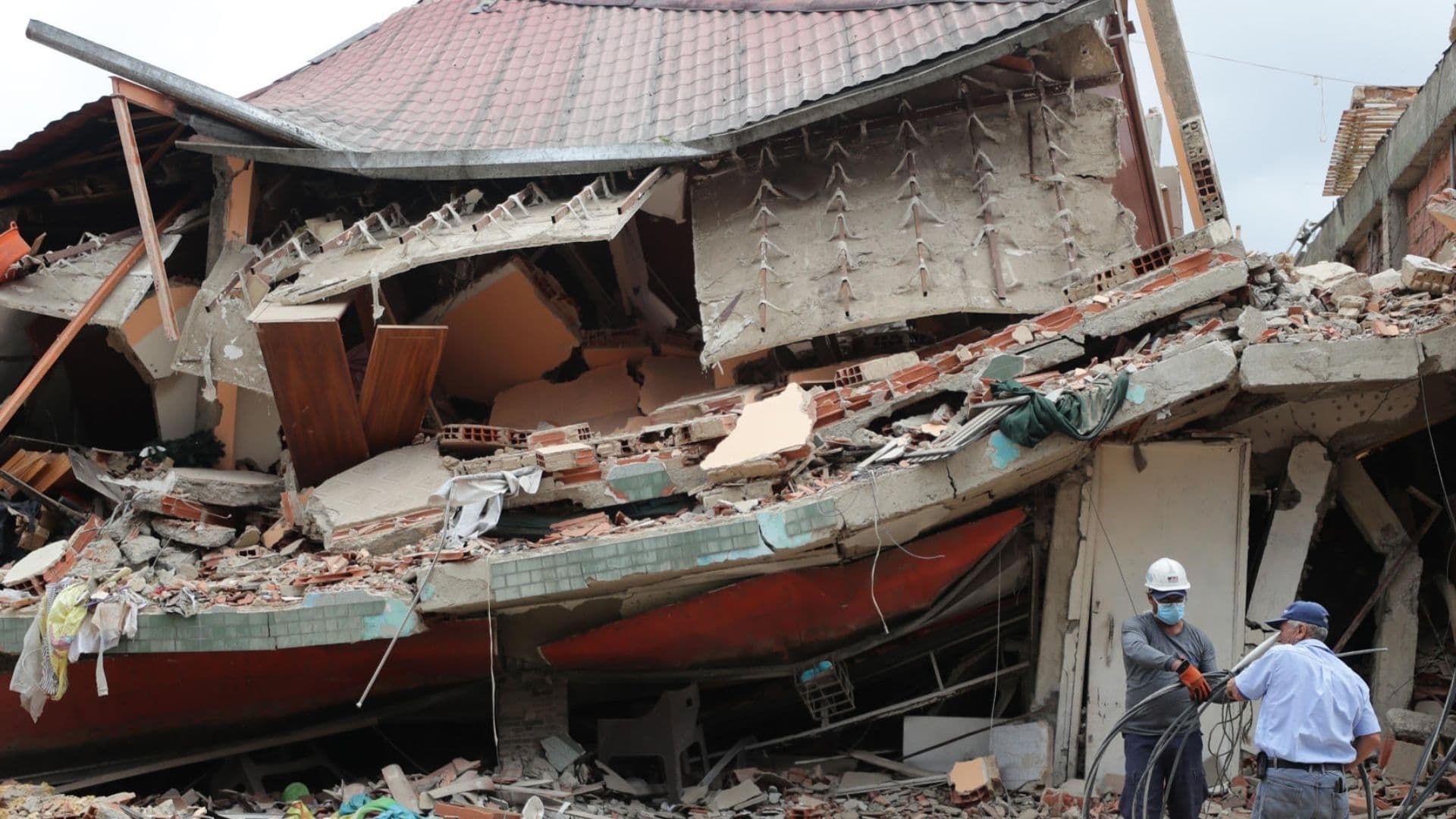
The twin earthquakes that struck Venezuela on June 24 have left severe economic losses, with preliminary estimates indicating $6.7 billion in direct physical damage, about 6% of the National Gross Domestic Product (GDP). The information is contained in a rapid assessment report from the United Nations Development Program (UNDP). The analysis, conducted within hours of […]
The twin earthquakes that struck Venezuela on June 24 have left severe economic losses, with preliminary estimates indicating $6.7 billion in direct physical damage, about 6% of the National Gross Domestic Product (GDP).
The information is contained in a rapid assessment report from the United Nations Development Program (UNDP). The analysis, conducted within hours of the disaster, provides an early estimate of the scale of destruction across the country’s northern region. The economic losses, however, are expected to go up.
The quakes, measuring magnitudes 7.2 and 7.5, were felt across major population and commercial hubs, including Caracas, La Guaira, Carabobo, Miranda, Yaracuy, and Aragua. UNDP estimates that 1.7 million buildings were exposed to seismic intensities of VI (MMI) or higher, with the largest concentrations in Distrito Capital, Carabobo, Yaracuy, Miranda, and Aragua. These exposure estimates help identify where structural evaluations, safety inspections, debris removal, and infrastructure recovery planning are most urgently needed.
Overall, the analysis found that 8.6 million people experienced above‑moderate shaking, and 2.1 million were exposed to stronger, more damaging seismic activity. As of Sunday, the official death toll stands at 1,450, though authorities expect the number to rise as rescue operations continue.
UNDP emphasized that while the economic losses are substantial, the greatest burden falls on the affected communities, where millions now face the long road to recovery amid destroyed homes, disrupted livelihoods, and damaged essential services.
Direct physical damage—estimated at $6.7 billion, within a range of $4.7 billion to $8.7 billion—was calculated using the CLIMADA model, which integrates USGS ShakeMap ground‑motion intensity, the spatial distribution of exposed assets, and damage functions derived from international earthquake observations. Each estimate carries an uncertainty margin of ±30%, reflecting variations in structural vulnerability and construction quality that cannot be directly observed through global datasets.
The current figure does not include infrastructure losses, broader economic disruption, or long-term reconstruction costs. Historically, total economic impact from disasters is calculated at 1.5 to 3 times the direct physical damage, suggesting Venezuela’s eventual recovery bill could be significantly higher.
“The speed and accuracy of early assessments are essential for an effective response,” said Luis Francisco Thais, UNDP Resident Representative in Venezuela, in a statement. “Tools like RAPIDA help us make faster, evidence-based decisions to support affected communities. At the same time, every crisis is an opportunity to rethink development strategies with resilience at their core.”
Satellite imagery detected drops in night-time lighting in parts of Carabobo, La Guaira, Caracas, and Aragua, suggesting possible power outages following the quakes. Damage to electrical infrastructure has not yet been fully quantified.
UNDP deployed its AI-powered Rapid Digital Assessment (RAPIDA) within hours of the disaster. The tool integrates seismic modeling, high-resolution satellite imagery, and GIS technology to provide near-instant situational awareness and support coordinated interventions within the first 72 hours. Additional satellite analysis is underway as clearer imagery becomes available, helping authorities refine casualty estimates, assess displacement, and prioritize recovery efforts.